
Essential aspects that every reliable and quality forex trading course must cover for it to be considered suitable for your trading success
As a beginner trader, one of the major challenges you are likely to face is choosing the best forex trading course that can truly help you become profitable. Profitability is the dream of every new trader in the financial market. However, when you look at the forex market today, you will notice that there are tons of forex trading courses everywhere. Sadly, despite paying for many of these courses, most traders continue to lose money.
This raises an important question: Does this mean that these courses do not work, or are traders simply not learning the right way? In this article, you will find out.
Over the years, forex trading has evolved into different dimensions. But the big question remains: have the charts changed? The answer is no. If you scroll back to the 1970s, when modern charting began, you will notice that candlesticks are still the same, chart patterns are still the same, and price delivery methods are still the same. Nothing significant has changed over the decades. What truly changes is people’s perspective and approach to price and its movement. New theories, trading concepts, and strategies continue to emerge, but the market structure remains the same.
So, as a new trader dreaming of making money from the forex market, before buying any forex course or enrolling in an academy, there are certain criteria that a course or academy must meet for it to be suitable for your trading success.
That is why in this article, we are going to outline eight critical aspects of trading that any quality forex trading course or academy should cover properly for you to consider it the best option as a new trader. These aspects will help you understand what forex trading truly is and the best approach to it if you want to succeed in the financial market. Are you ready? Let’s get into it.
The Eight Core Aspects Every Forex Trading Course Must Cover
The eight essential aspects that every reliable and quality forex trading course must cover for it to be considered suitable for your trading success are:
- The Forex Basics
- Fundamentals
- Chart Patterns
- Candlestick Patterns
- Trend Trading
- Price Action
- Smart Money Concept (SMC)
- Risk Management
Having listed them, let’s go further and explain how each of these aspects will help you understand forex market behavior and improve your trading decisions.
1. The Forex Basics
The forex basics help you understand what forex trading is and how the financial market works in general. In this aspect, you will learn how major market participants such as big banks, hedge funds, institutional investors, and smart money players move price.
A solid forex basics module should cover all the foundational aspects of trading. It should help you understand who controls the market, how price is influenced, who the market makers are, and where retail traders truly stand in the financial ecosystem. This knowledge helps you trade with realistic expectations and a proper market mindset.
As you consider enrolling in a forex course, make sure to ask yourself key questions that tie back to these concepts: Does the course explain who the market participants are? Does it show how these participants influence price movements? Does it clarify the role of retail traders versus institutions? A good course should provide clear answers and insights into these fundamental aspects.
2. Fundamentals
The fundamental aspect of trading helps you understand how economic and geopolitical events impact price movement. In this section, you will learn how interest rates, inflation data, employment reports, central bank decisions, and political events affect the value of a currency in the financial market.
Understanding fundamentals allows you to know why price moves, not just how it moves, which is a major advantage for any trader.
3. Chart Patterns
Chart patterns are another aspect that has existed in the forex market for a very long time. Although some traders consider them outdated, the big question is: Does forex really have anything outdated? Chart patterns have been present since the beginning, and they are still very effective today.
Learning chart patterns helps you identify potential price reversals or continuation signals at your anticipated areas of interest. These patterns help confirm whether price is likely to continue in its current direction or reverse entirely, boosting your confidence when taking a trade. Chart patterns remain a powerful aspect of trading that should never be neglected.
4. Candlestick Patterns
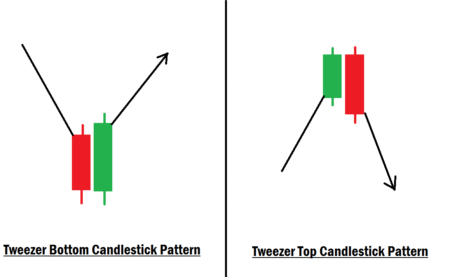
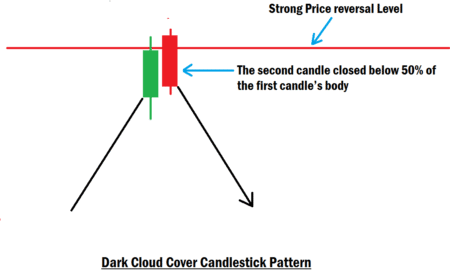
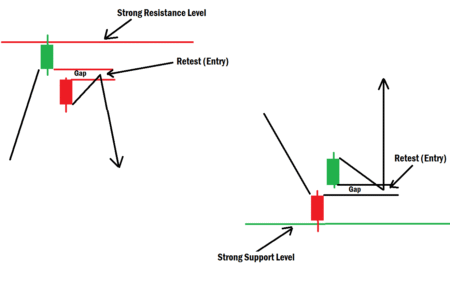
Candlestick patterns are an aspect of forex trading that no new trader can do without. Candlesticks tell a story about price behavior at key levels where continuation or reversal is expected.
With candlestick patterns, you can confirm your entries instead of entering trades blindly. They help you filter out bad trades and prevent unnecessary stop-outs before the real move begins. Candlestick patterns are especially effective for entry confirmation and trade timing.
5. Trend Trading
Trend trading is very beginner-friendly and is something price can never do without. As the popular saying goes in the market: “The trend is your friend.”
This aspect of trading teaches you how to use simple tools like trendlines to join the market trend and take high-probability trades. Trend trading is one of the oldest and most effective trading approaches that every beginner needs to learn, understand, and master.
Price only moves in two major phases: consolidation (sideways movement) or trending. When price is in a trending phase, it becomes easier for traders to make money by following the direction of the trend. This aspect teaches you how to identify and take advantage of trends to generate profit in forex trading.
6. Price Action
Price action teaches you how to follow the structural movement of price to make informed trading decisions in the forex market. With price action, you will understand how price structures itself using highs and lows.
You will learn how to interpret market structure, identify key levels, and understand what price is attempting to do. This knowledge helps you align your trades with market behavior and significantly improves your technical analysis as a retail trader.
7. Smart Money Concept (SMC)
Smart Money Concept (SMC) represents a more modern approach to forex trading. In recent years, many new traders have shifted toward trading using smart money concepts.
SMC helps you understand and interpret the actions of institutional traders in the market. It is based on identifying the footprints of big players such as banks, hedge funds, and other large market participants. This aspect teaches you how price behaves when institutions enter the market and how they manipulate liquidity.
Since institutional traders are the ones that truly move the market, not retail traders, SMC allows you to align yourself with their movements and take advantage of them to make profits.
8. Risk Management
Risk management is one of the most important aspects of trading. In this section, you will learn how to manage your trading capital properly. This includes understanding leverage, position sizing, stop-loss placement, and profit targets.
No trader can succeed without applying proper risk management. Good risk management helps preserve your capital, reduces emotional trading, and ensures long-term consistency throughout your trading journey.
Final Thoughts
Nothing should be considered outdated in the forex market as long as it is still effective. Becoming a professional trader means being able to combine all aspects of trading to build your own understanding of the financial markets and develop a personal edge.
That is why you must put in the hard work, not just to learn these aspects of trading, but to master each and every one of them. Forex trading thrives on mastery, not just surface-level learning.
If you have any other questions about choosing the best forex trading course for your trading journey, feel free to let us know in the comments section. We wish you the very best in your trading journey.