
What Every Beginner Should Know About the Average Hourly Earnings Economic News Report in Forex Trading
The Average Hourly Earnings (AHE) economic report is one of the most important high-impact economic indicators in the forex market. It is closely monitored by institutional investors, hedge funds, central banks, and professional traders because it provides critical insight into wage growth, inflation pressure, consumer spending power, and overall economic strength.
For beginner traders, understanding the Average Hourly Earnings report is essential because it often triggers sharp price movements, increased volatility, slippage, and sudden trend shifts, especially in major currency pairs such as EUR/USD, GBP/USD, USD/JPY, and the USD Index (DXY).
In this comprehensive guide, you will learn everything you need to know about the Average Hourly Earnings report, explained in simple, beginner-friendly language, while maintaining a professional financial perspective.
Why the Average Hourly Earnings Report Matters in Forex Trading
In the forex market, price does not move randomly. The market is driven by large institutional players, banks, hedge funds, asset managers, and central banks. These “big players” control massive amounts of capital, and their actions are what cause price displacement.
As a retail trader, your goal is not to fight these institutions, but to align yourself with them.
- When big players are buying, price rises.
- When big players are selling, price falls.
If you buy while institutions are selling, or sell while they are buying, you are trading against the market and putting yourself at a disadvantage. The Average Hourly Earnings report often triggers institutional repositioning, which is why it can cause explosive price movements.
What Is the Average Hourly Earnings Economic Report?
Average Hourly Earnings (AHE) measures the average amount of money employees earn per hour, excluding agriculture and a few other sectors. It is released as part of the U.S. Non-Farm Payrolls (NFP) report, usually on the first Friday of every month.
The report is published by the U.S. Bureau of Labor Statistics (BLS) and reflects:
- Wage growth trends
- Inflationary pressure
- Consumer purchasing power
- Labor market strength
Because wages directly influence inflation, the Average Hourly Earnings report plays a major role in shaping Federal Reserve monetary policy decisions, especially interest rate expectations.
Why Investors and Big Traders Care About Average Hourly Earnings
Institutional investors care deeply about Average Hourly Earnings because:
- Rising wages can lead to higher inflation.
- Higher inflation increases the likelihood of interest rate hikes.
- Higher interest rates strengthen a currency.
- Stronger currencies attract global capital.
This chain reaction is why Average Hourly Earnings has a powerful impact on USD-related currency pairs, gold, and risk assets.
How Average Hourly Earnings Impacts a Currency When It Rises or Falls
When Average Hourly Earnings Rises (Bullish for USD)
If the reported data is higher than the previous data, and the market expectation (forecast):
- It signals strong wage growth.
- Inflation pressure increases.
- The Federal Reserve may become more hawkish.
- The U.S. dollar strengthens.
When Average Hourly Earnings Falls (Bearish for USD)
If the reported data is lower than the previous one and the market expectation (forecast):
- Wage growth slows.
- Inflation pressure weakens.
- Rate hike expectations decline.
- The U.S. dollar weakens.
Why Average Hourly Earnings Causes Sudden Price Spikes
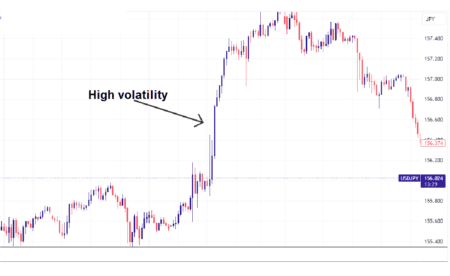
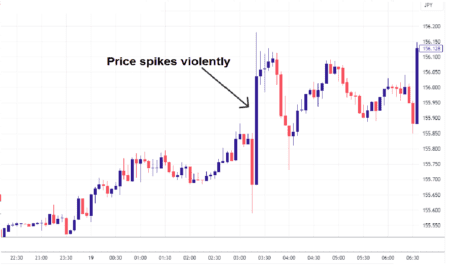
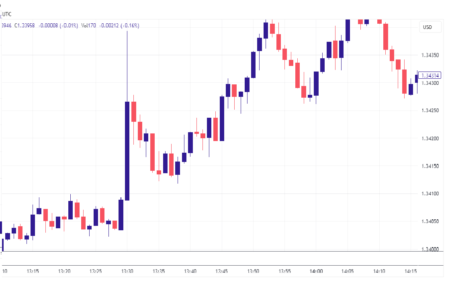
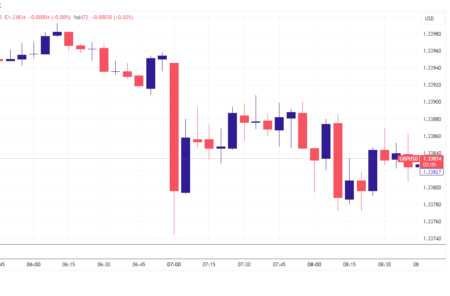
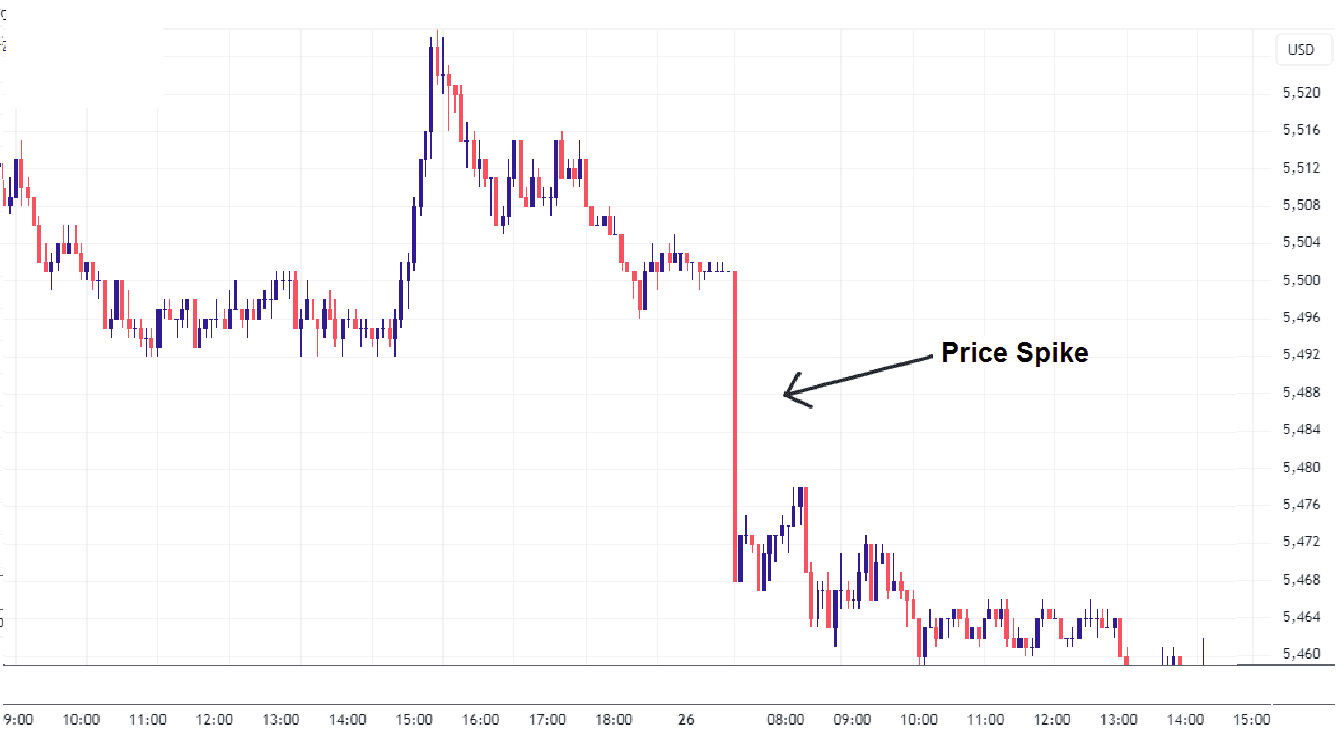
Average hourly earnings is a high-impact news monitored by every large market participant. Imagine placing a buy trade on EUR/USD, only to return moments later and find price has violently moved against you, triggering slippage at your stop loss. For many beginners, this feels confusing and frustrating.
In most cases, this happens because:
- The Average Hourly Earnings data has just been released.
- Institutional traders entered or exited large positions.
- Liquidity temporarily dried up.
- Spreads widened, and volatility exploded.
This is why high-impact news events are extremely dangerous for beginners.
Effect of Average Hourly Earnings on Gold (XAU/USD)
Gold is highly sensitive to wage data because of its relationship with:
- Inflation
- Interest rates
- U.S. dollar strength
Strong AHE Data:
- Increases rate hike expectations
- Strengthens USD
- Gold often falls
Weak AHE Data:
- Reduces rate hike expectations
- Weakens USD
- Gold often rises
This inverse relationship makes Average Hourly Earnings a key event for gold traders as well.
How the Market Reacts After the Data Is Released
Market reaction usually follows three phases:
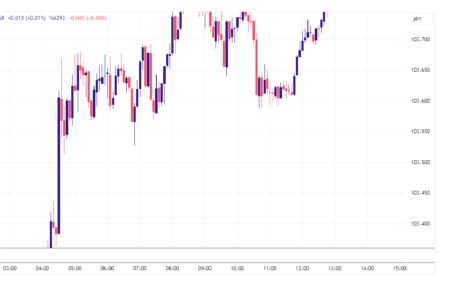
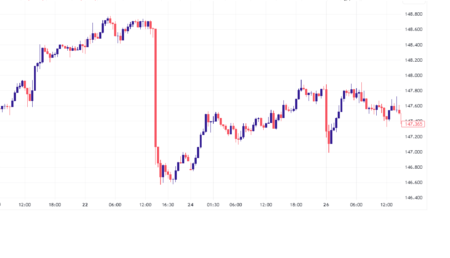
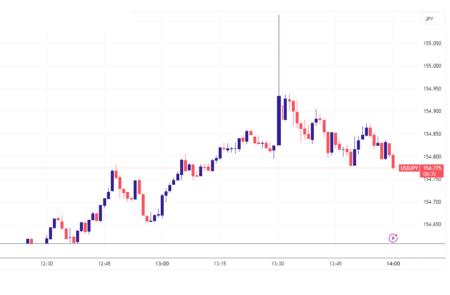
- Initial Spike – Extreme volatility and sharp candles.
- Fake Moves – Whipsaws designed to trap retail traders.
- True Direction – Institutions reveal their real intent.
Beginners often get trapped during phases 1 and 2, which is why trading during the release is highly discouraged.
Average Hourly Earnings Release Schedule
- Released monthly.
- Usually on the first Friday of the month.
- Published alongside Non-Farm Payrolls (NFP).
- Classified as High-Impact Economic News.
Where to Check Average Hourly Earnings Data
Reliable sources include:
- Forex Factory Economic Calendar
- Investing.com
- Official Bureau of Labor Statistics (BLS) releases
Always check the calendar before placing any trade.
Why There Is No Recommended Trading Strategy for Beginners
There is no safe or reliable strategy for beginners during Average Hourly Earnings releases because:
- Volatility is unpredictable.
- Spreads widen drastically.
- Slippage is common.
- Stop losses may not be respected.
Even professional traders approach this report with extreme caution.
Why Beginners Should Avoid Trading During the Release
As a beginner:
- Your capital is limited.
- Your execution speed is slower.
- Your emotional control is still developing.
One bad trade during this news can wipe out weeks or months of progress. The smartest decision is to stay out of the market and wait for clarity.
Frequently Asked Questions (FAQs)
Is Average Hourly Earnings the same as Non-Farm Payrolls?
No. Average Hourly Earnings focuses on wage growth, while NFP measures job creation. However, both are released together.
Is Average Hourly Earnings high impact?
Yes. It is classified as high-impact economic news.
Does Average Hourly Earnings affect all currency pairs?
It primarily affects USD-related pairs, but its impact can extend to the broader market.
Can I trade Average Hourly Earnings with a small account?
It is strongly discouraged, especially for beginners.
Is higher Average Hourly Earnings always good?
Not always. Excessive wage growth can increase inflation too much, which may negatively affect risk assets.
Important Risk Notice for Beginners
Forex trading is highly risky and not suitable for everyone. Never trade live with real money as a beginner without first mastering your strategy on a demo account. No strategy works 100% of the time, which is why risk management, stop losses, and capital protection are non-negotiable.
If you have more questions concerning this topic, go ahead and let us know in the comments section.
Trade smart. Protect your capital. Stay disciplined. Stay blessed!